

Image Credit: Unsplash
Turning a standard vehicle into a true adventure rig means creating a mobile basecamp that supports your unique travel style. Whether you’re a weekend warrior hitting local trails or planning a long-term overland expedition, the right upgrades can dramatically improve your comfort, capability, and confidence on the road. These modifications transform a simple van or truck from a means of transport into a personalized space for living and exploring.
This guide walks through the smart upgrades that offer the biggest returns for your adventure vehicle. From enhanced solar setups to improved suspension systems, these thoughtful modifications can significantly elevate your overlanding experience, with some essential Sprinter upgrades offering superior comfort and capability.
Why Upgrade Your Van
Upgrading your adventure vehicle is a strategic investment in both its performance and the freedom it gives you. Each modification solves a specific challenge of life on the road, whether it’s staying warm on a cold night, navigating a rough track, or simply having enough space to live comfortably. Thoughtful upgrades make your vehicle more useful, letting you stay off-grid longer, reach more remote places, and enjoy a higher quality of life while traveling.
A well-planned upgrade path can also make your vehicle last longer and be more reliable. For instance, reinforcing the suspension not only improves the ride but also prevents other parts from wearing out too soon when carrying a heavy load. A properly installed electrical system protects your vehicle’s main battery and ensures you have reliable power without risking a dead engine. These camping car improvements are about building a more resilient and capable platform for your adventures, ultimately making your travels safer and more enjoyable.
Essential Interior Mods
The inside of your adventure vehicle is your living room, kitchen, and bedroom all rolled into one. Making this limited space as functional and comfortable as possible is key to happy, long-term travel. Any interior modification should aim to maximize every square inch of usable space without adding unnecessary weight.
One of the biggest challenges in any van conversion is creating a comfortable sleeping area without taking up the entire living space. A common solution is to build a bed that runs lengthwise, but this often leaves very little room for a galley or seating. A more innovative approach is to create space for a sideways sleeping arrangement. You can do this by installing side flares for your campervan, which are pods that extend the width of your vehicle at the sleeping level. Consider these other essential interior upgrades:
- Insulation and Sound Deadening: This is a non-negotiable first step. Proper insulation regulates the interior temperature, keeping you cooler in summer and warmer in winter. It also helps control condensation. Sound-deadening material reduces road noise, making for a much quieter and more peaceful living environment.
- Ventilation: A high-quality roof fan is critical for managing airflow, reducing moisture buildup, and drawing fresh air in or pushing cooking odors out. Pairing a fan with a crackable side window creates excellent cross-ventilation.
- Modular Furniture: Instead of fixed, heavy cabinets, consider modular systems. This could include removable storage boxes, a fold-down table, or swivel seats at the front. This flexibility lets you adapt the space for different needs, whether you’re working, cooking, or relaxing.
Exterior Enhancements
What you add to the outside of your adventure vehicle is just as important as what you do inside. Exterior enhancements are all about increasing your rig’s capability, utility, and durability, enabling you to tackle more challenging terrain and carry the gear you need for your hobbies.
A set of quality all-terrain tires will provide better traction and puncture resistance than standard highway tires, giving you the confidence to explore dirt roads and less-traveled paths. For those planning to venture onto more serious trails, pairing new tires with a suspension lift provides valuable ground clearance to avoid obstacles. It’s important to choose the right tires for your specific vehicle and anticipated driving conditions.
Other key exterior upgrades include:
- Roof Rack: A sturdy roof rack is the workhorse of an adventure vehicle’s exterior. It provides a platform for mounting solar panels, carrying bulky gear like kayaks or bikes, and installing a rooftop storage box for items you don’t need to access daily.
- Awning: An awning is one of the quickest and easiest ways to double your living space. It provides essential shade from the sun and shelter from the rain, creating a comfortable outdoor patio area for cooking, eating, or just relaxing.
- Upgraded Lighting: Factory headlights are often inadequate for navigating unlit backroads at night. Adding auxiliary lighting, such as a light bar or smaller ditch lights, can dramatically improve visibility and safety when driving after dark in remote areas.
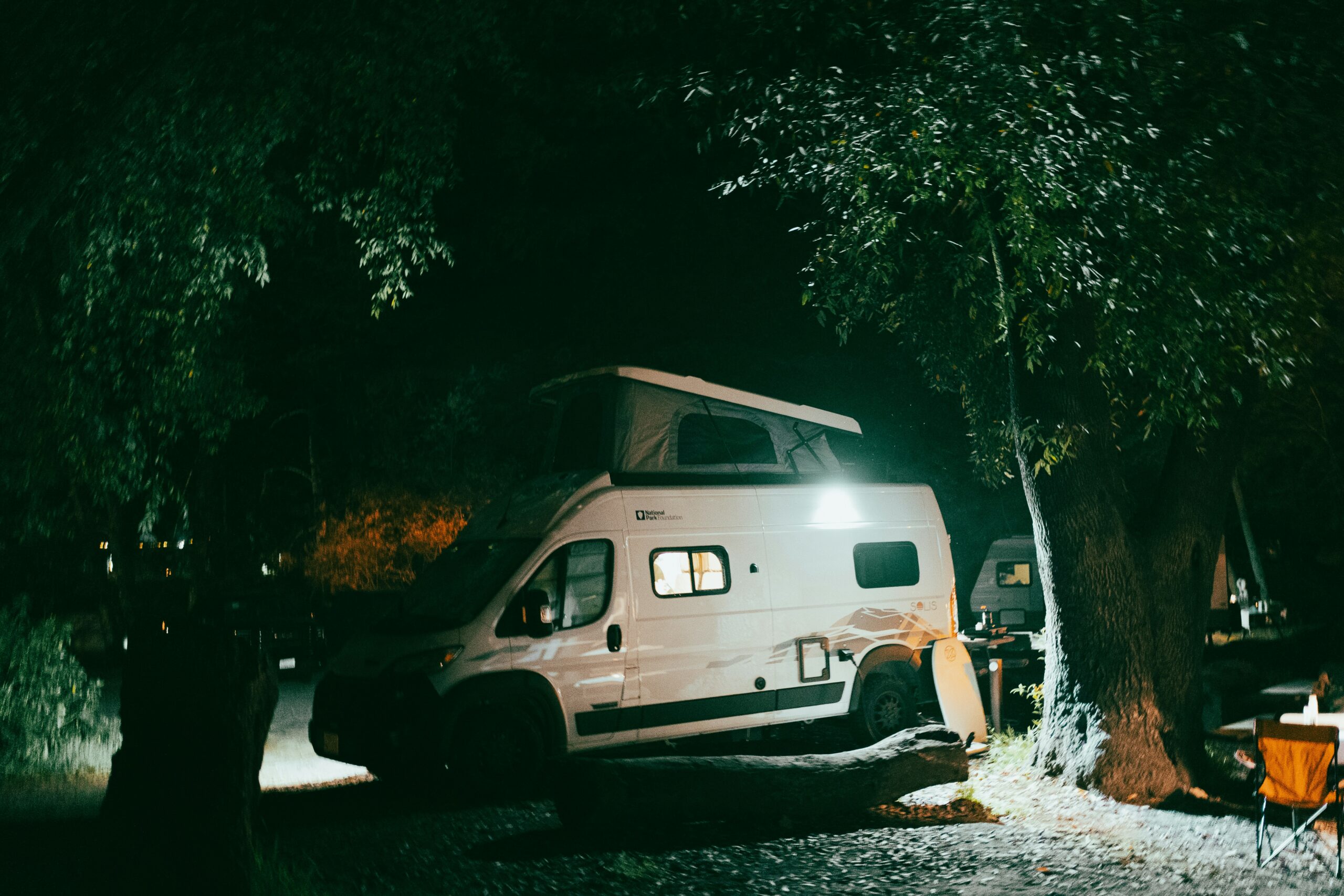
Image Credit: Unsplash
Powering Your Adventures
Building a self-sufficient power system allows you to camp comfortably off-grid without relying on noisy generators or crowded campgrounds with electrical hookups. The core of the system is a “house” battery bank, which is separate from your vehicle’s starting battery.
This ensures you can use power freely in your living space without ever worrying about being unable to start your engine. And there are three primary ways to charge your house batteries:
- Solar Power: Mounting solar panels on your roof is the most popular method for off-grid charging. A well-designed solar setup can provide all the power you need on sunny days. The system consists of panels, a charge controller to regulate energy flow, and wiring to connect everything to your batteries.
- Alternator Charging: A DC-to-DC charger allows you to use your vehicle’s alternator to charge your house batteries while you’re driving. This is an incredibly efficient way to top off your batteries during travel days between destinations.
- Shore Power: This involves installing an exterior port that allows you to plug your vehicle into a standard 120V outlet at a home or campground, providing unlimited power and a fast way to charge your battery bank fully.
Safety and Security
When your vehicle is also your home, protecting it and yourself becomes a top priority. It’s wise to take practical steps to secure your vehicle and prepare for potential emergencies, especially when traveling in unfamiliar or remote areas. If you’re planning a camping trip with your family, these precautions can also give you greater peace of mind throughout the journey.
For a higher level of protection, consider installing an alarm system or a hidden kill switch that prevents the engine from starting. Many travelers also use GPS tracking devices, which can be invaluable for recovering a stolen vehicle. There are many vehicle security strategies for travelers that can be adapted to any budget. Every adventure vehicle should be equipped with:
- Fire Extinguishers: Keep at least two, one accessible from the driver’s seat and another in the main living area. Ensure they are rated for multiple fire types (Class ABC).
- Smoke and Carbon Monoxide Detectors: These inexpensive, life-saving devices are non-negotiable in a space where you’ll be sleeping and may be using propane for cooking or heating.
- First-Aid Kit: Build a comprehensive trauma kit that includes items for treating more serious injuries, such as a tourniquet, compression bandages, and trauma shears.
These smart upgrades are about more than just adding features to a vehicle. They are investments in your comfort, safety, and freedom, turning your van or truck into a reliable partner for whatever adventures lie ahead. Each modification brings you one step closer to a rig that’s perfectly tailored to you.