
Image Credit: Unsplash
A family kitchen works best when everyday tasks feel easy, even during the breakfast rush or the scramble to get dinner on the table. Good design places the things you use close at hand, keeps busy routes clear and uses surfaces that won’t demand constant care. Focus on how your household moves through the room, and you’ll create a kitchen that stays practical as family life changes.
Prioritise High-Traffic Flow
Start by mapping the routes between the entrance, fridge, sink, hob and dining area. A useful kitchen work triangle keeps the three main work zones reasonably close, but family kitchens also need space for people passing through. Aim for walkways of at least 90 cm, increasing this to around 120 cm where two people regularly cook together.
Keep bin drawers and the dishwasher near the sink so clearing plates doesn’t block food preparation. An island can add valuable workspace, but test its proposed footprint with cardboard boxes first. Live with the mock-up for a day and check that cupboards, appliances and doors can open fully.
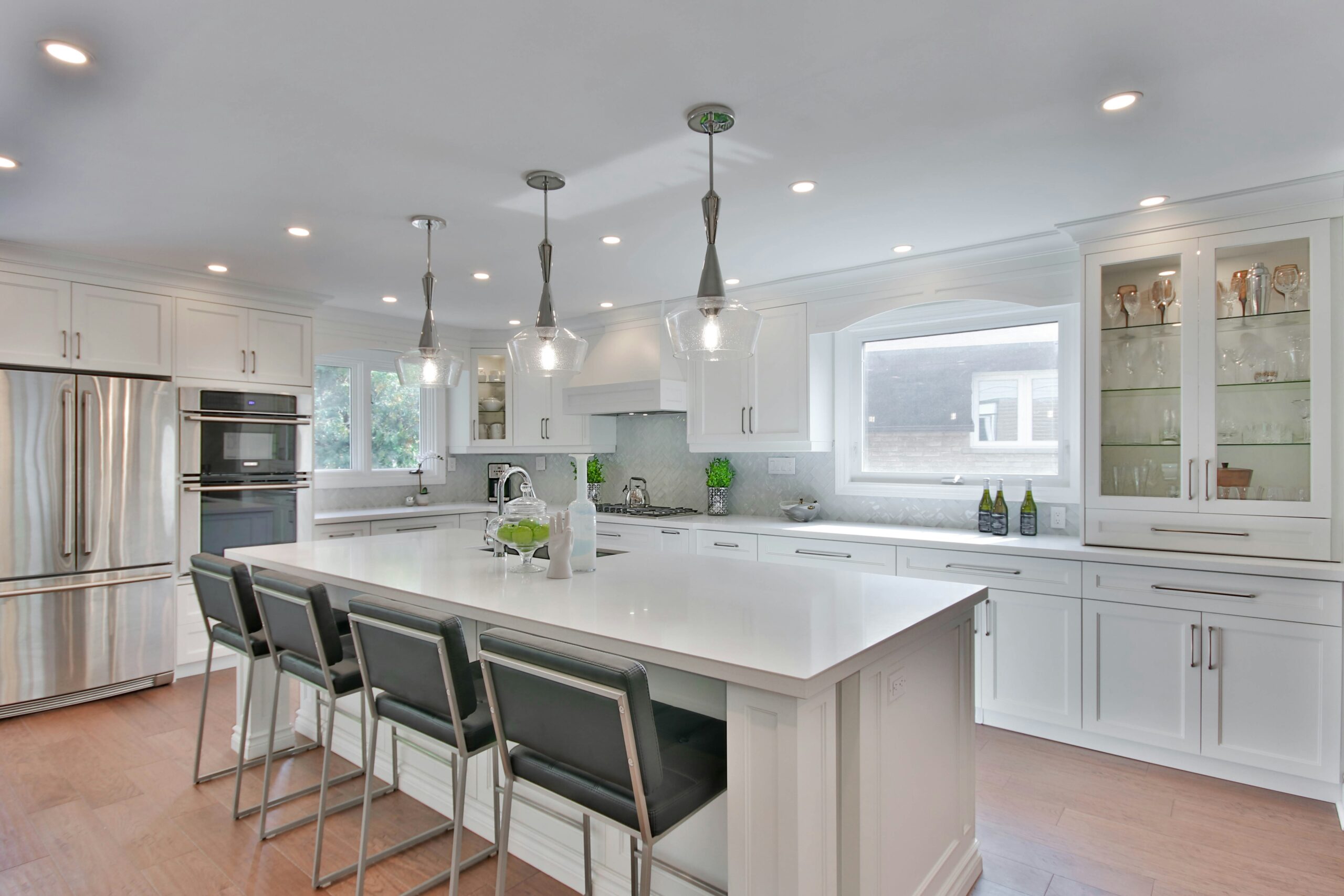
Looking at how another family uses its kitchen can also help you identify practical layout ideas. This kitchen house tour shares an example of how separate cooking areas, cupboard space and a breakfast bar can work together in a family home.
Ditch Grout Lines Behind the Hob
The area behind the hob catches oil, sauce and condensation, so pick a surface that can be wiped clean without scrubbing narrow joints. Browse kitchen splashback ideas early in the design process, as the finish can influence your wall colour, worktop and lighting choices.
For a low-maintenance option, custom-sized toughened glass splashbacks create a smooth surface with no grout lines across the main panel. Measure only after worktops and units are fitted, and account for sockets or other cut-outs. Keep a soft cloth and a suitable glass cleaner nearby so splashes can be dealt with before they dry.
Organise Storage by Frequency of Use
Give the easiest-to-reach cupboards to items your family handles every day. Plates, mugs and breakfast bowls belong between waist and shoulder height, while occasional baking tins can sit higher up. Heavy pans are safer in deep drawers below the worktop than in an overhead cupboard.
Create simple activity zones too. Store tea, coffee and mugs near the kettle, then keep lunch boxes, reusable bottles and food containers together in one drawer. Children can have a low cupboard for their cups and snack bowls if they’re old enough to use it safely. Labels help everyone return items to the same place, which stops one person becoming the household’s full-time finder of missing things.
Select Resilient Worktop Materials
Choose a worktop according to the treatment it will receive on an ordinary Tuesday, not how it looks in a pristine showroom. Quartz is non-porous and easy to clean, although very hot pans still need trivets. Laminate offers plenty of colours at a lower price, but exposed joins and standing water require care. Solid wood brings warmth, though it needs regular oiling and quick attention when drinks spill.
Take samples home and view them in morning and evening light. Test how easily they show crumbs, fingerprints and water marks. A heavily patterned surface can hide everyday mess, while a plain dark finish may reveal every smear. Rounded edges are also kinder in narrow routes where children frequently pass.
Routines for Quick Evening Resets
A short reset makes the next morning much calmer. Set a ten-minute timer after dinner and give each person an age-appropriate task. One person can load the dishwasher, another can clear the table, and someone else can wipe the worktops. Finish by putting breakfast items together so they’re ready to use.
Keep the routine realistic. Empty the food waste caddy, deal with obvious spills and return stray items to their zones, but leave deeper cleaning for a planned weekly slot. A small tray can collect paperwork, chargers and keys that drift onto the worktop during the day. Once the surfaces are clear and the sink is empty, the kitchen is ready for breakfast without a late-night cleaning marathon.
The best test of a family kitchen comes at its busiest moment. If someone can make tea while another packs lunches and a child reaches their bowl without causing a traffic jam, the layout is doing its job.