
The shift happening isn’t a subtle one. Nightclub revenue has been dropping, weathering a 21% decrease since 2009, despite an increase in the country’s population. The figures of who shifts the earth have started to change their behaviors too. Customers aged between 14 and 34 went to nightclubs once a week or more frequently the most in 2003, at 12.7 %. In 2014, the most regular patrons of nightclubs were between 35 and 64. The figure was 11.3 percent.
The Hangover Economy Collapses
Late-night clubbing had a tax more punishing than the bar bill. The Sunday you wrote off in recovery, the dread that came with a hangover, the $60 cab home at 3am, these were costs that eventually the younger generations stopped paying.
You hear the term “sober-curious” movement bandied about in discussions like these, but the real impetus is far more basic: individuals want to feel good the next day. A two-hour bottomless brunch that finishes at 3pm guarantees you a night and Monday morning untouched by a rough hangover. That’s not a wellness trend. That’s just simple arithmetic.
Hospitality started clocking the numbers shifting first, well before most of the opinion industry woke. The new peak hour that 20 years ago might have been 11 pm on a Saturday night now is 1 pm. Kitchens are designed around it. Revenue forecasts are designed around it. Daytime trade is not a secondary consideration of the hospitality industry anymore, it’s the primary one.
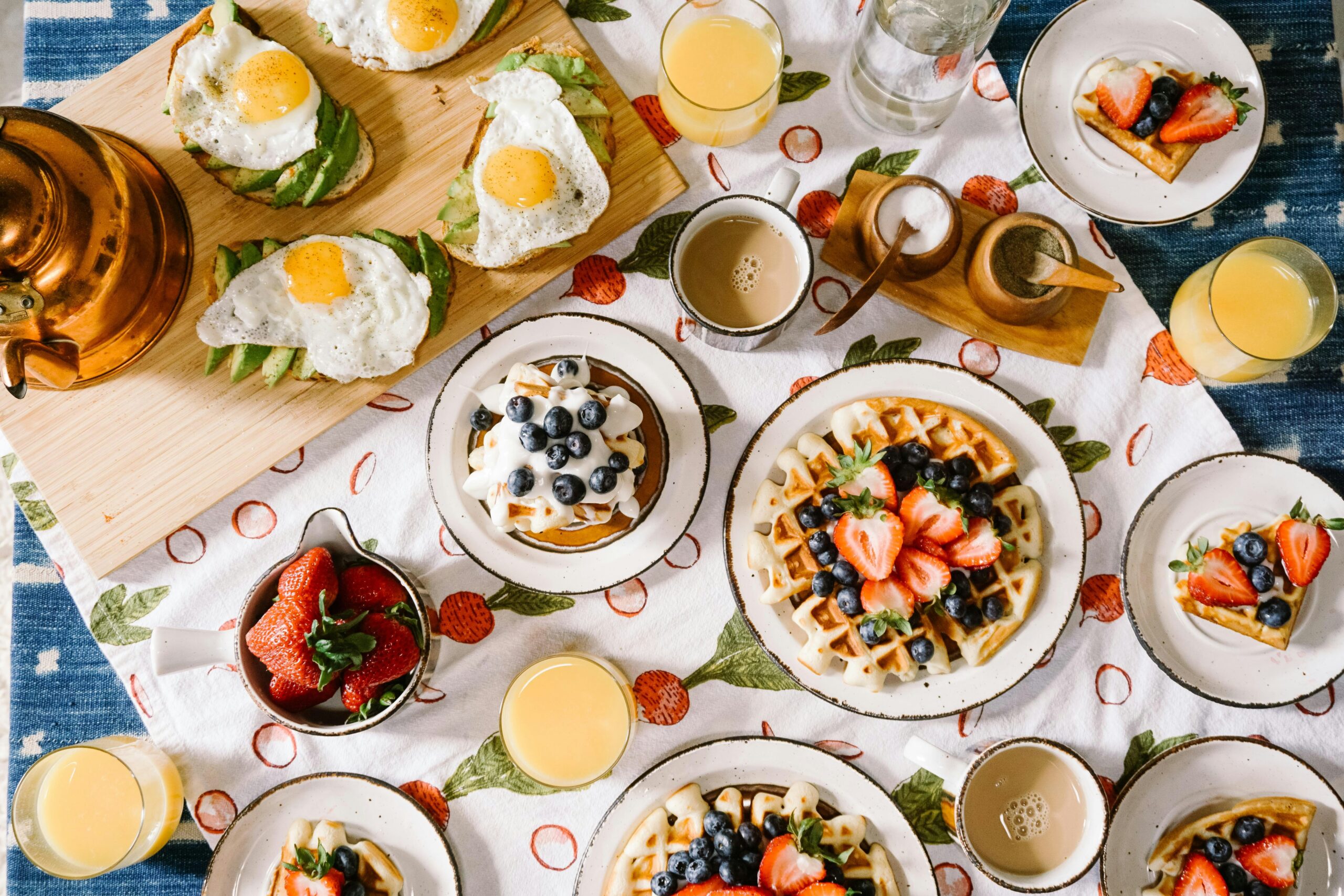
Photo by Rachel Park on Unsplash
Energy Without the Aftermath
It wasn’t the drinks that made nightclubs attractive. It was the vibe, the feeling of dynamism, of being part of something. And perhaps in the popular imagination, that feeling could only be conjured in the dark and at late hours.
Brunch spots have shown that’s not true. We have all seen DJs spinning records for a packed dining room at noon, performers making the rounds of tables, brunches themed to eras or cultural moments, the energy of the dance floor has been successfully transferred from the nightclub to the dining room. It’s just that the format needed to be played around with a bit.
Immersive dining is the hospitality industry’s version of the experience economy. People are not paying for food and drink so much as a story to tell afterwards, a few hours that felt different from the rest of the week. And that, if done right, is what a themed brunch over a quiet table for two can offer.
The Economics Make Sense For Everyone
From a consumer’s perspective, the bottomless brunch model is simply effective. You pay for your eats, your drinks, and often some sort of entertainment over a set timeframe. There’s no calculating the cost of each drink, no end-of-night surprise, no worrying about the bill ticking over by the minute.
For bookings that require people to travel in for the event, birthdays, reunions, work functions, that’s no small thing. A bottomless brunch in covent garden works as a financial and temporal ‘anchor’ for a whole day out. You know approximately what you’ll be spending on your day. You know that you’ll be out from 2 to 6. You work the rest of the day around that. And this is good for the house, as the turnover on a good bottomless brunch would be more than twice what a straight lunch or dinner service would be, often with more guaranteed spend as well.
Daylight is Better Content
Natural light has been a staple of food photography since long before Instagram. People naturally want to show off the best version of the things they love and if you can’t see it, you can’t ‘gram it. Brunch food, seen bathed in the rays of the sun in all its glorious detail, just looks good.
More practically, the impossibility of taking a “good” photo in the dark means that the more time people spend taking photos of your food, the more Instagrammable it has to be. Light attracts light, but the opposite is also true.
Social media content, especially Instagram posts, become an implicit recommendation to a broad audience of potential customers. If your food looks good, it’s also good advertising. And it’s free.
Quality Over Volume
The change isn’t just about drinking fewer alcoholic beverages. It’s about making a different choice. According to Barclaycard, almost 40% of people who say they’d rather socialize in the daytime do so in order to avoid late nights and the expense of going out. Yet what they’re opting to do instead isn’t just a truncated, slightly less boozy version of the same thing. It’s an entirely different experience.
A 90s-themed brunch with a live DJ and a menu conceptualized around the event is not a night out, watered down. It’s a different product with different bells and whistles. Diners sliding into this new trend aren’t making concessions. They’re simply deciding that two hours of high-energy, well-fed, socially connected time are worth more than four hours of trying to get the bartender’s attention in a club.
Hotels and eateries that get it are re-building the whole experience, not just adding a side of hashbrowns and hoping for the best. New themed events ranging in everything from music to the menu itself, are popping up all over. Places that still think of brunch as ‘Ack, we better open for lunch!’ on a Sunday are seeing early afternoon covers drop off, whilst the competition is full by midday.
This isn’t an end to the night out. It’s just becoming competitive. And to that end, the day is essentially being engineered with the same intention. Just better lighting and less time to get a second wind.