
The setting holds the stone and sits against your hand every day. It changes how the ring looks from the side and how it feels after a full day of wear.
Few pieces of jewelry take as much daily contact as a ring. These checks cover the stone, fit, routine, and questions to ask before paying.
Match the setting to the stone
Most settings belong to a few families. A prong, or claw, setting holds the stone with small metal claws.
A bezel wraps the stone’s edge in a thin metal rim. A halo surrounds the center stone with smaller diamonds, and pavé lines the band with small stones set close together.
Stone shape limits the options. Pointed corners need extra coverage at the tips.
Marquise, pear, and princess cuts often use V-shaped prongs over the points. A bezel that covers the whole edge is another option. If you have already chosen a pointed stone, ask to see it in both a prong and a bezel version.
Round stones suit almost every style, so the choice there depends on look and height. If you have not picked a stone yet, choose the shape first and the setting second.
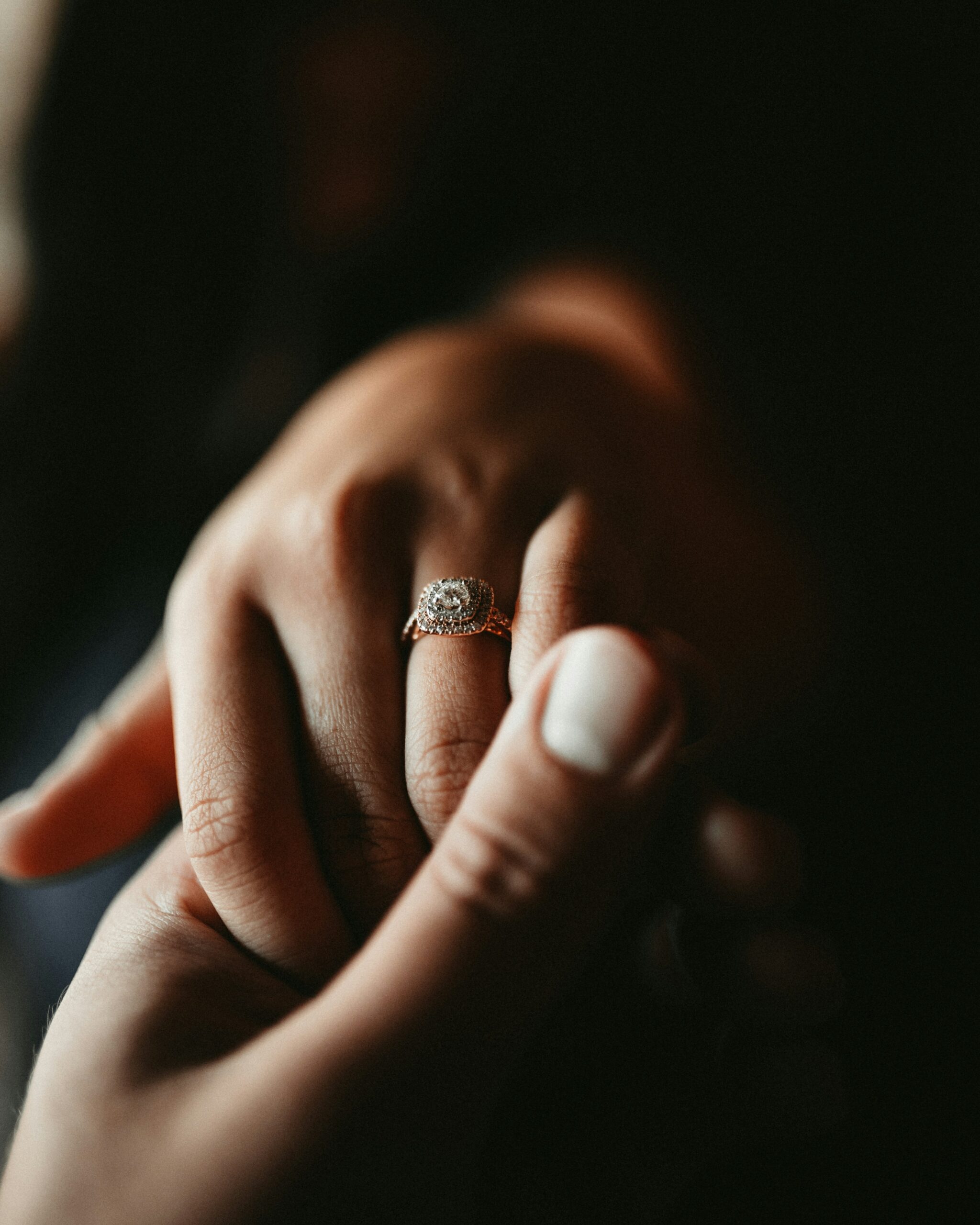
Check the proportions and the profile
Proportions describe how the stone’s size relates to the band. A large stone on a very thin band can look top-heavy and feel unsteady on the finger. Ask to see the ring on a hand, ideally yours, and look at it from the side.
Profile is the height of the stone above your finger. A high profile shows more of the stone but catches on pockets and knitwear. A low profile sits closer to the hand.
Try the ring on and make a fist. Pull on a sleeve or coat to see how the setting behaves.
Look at the band while you are there. A comfort fit band has a rounded inner surface, and many people find it easier to wear all day. Width and thickness matter as well: a wider band tends to fit tighter and may need a different size.
Pictures alone will not show this. Gather reference images before trying rings on. Browsing a jeweler’s site, such as Holts Gems London, can give you a starting point for styles and proportions.
Think about your daily routine
Let your routine shape the setting as much as your taste. If you work with your hands or wear gloves often, a lower profile and covered edges catch less. If your days are mostly desk-based, a taller setting with open sides is easier to live with.
Think about the tasks you do without taking a ring off. Cooking, gardening, DIY work, and handling tools can knock a ring against hard surfaces, and soap builds up under open settings. Use those tasks to decide what the ring needs to handle and what to ask about later.
If you swim or lift weights, you may take the ring off often. Plan where you will keep it when it is off your hand.
Small stones add upkeep. Halo and pavé designs set many small diamonds into the ring, and any one of them can loosen over years of wear. They work well if you plan on periodic checks. The care section below covers those checks.
Try a wedding band next to it
An engagement ring is usually worn with a wedding band later. Test the pairing now. Ask to place a plain band next to the setting and look at how the two meet. Some combinations sit flush, while others leave a small gap between the rings.
A gap is a look some people prefer. If you want the two rings to touch, a curved wedding band can follow the setting’s outline. Settling this now gives you more options when you shop for the band.
Try the band on both sides of the engagement ring if you plan to wear two. Some people add an anniversary band later, and a setting that pairs well on either side keeps that option open.
Ask about resizing and long-term care
Fingers change size over the years. Ask whether the design can be resized before you buy. A plain band or simple solitaire, one stone on an unadorned band, can usually be resized. Bands with pavé stones running all the way around are difficult to resize, and some cannot be altered at all.
Metal affects upkeep as well. White gold is normally finished with a thin layer of rhodium for brightness. That finish can wear with time and need reapplying.
Platinum and yellow gold keep their own color and need different care. Ask the jeweler what upkeep each metal involves before you decide.
Ask what aftercare comes with the ring. Many jewelers offer inspections of prongs and small stones, and terms vary from one workshop to another. Where possible, get the answers in writing to compare jewelers on the same terms.
Shortlist two or three settings and try each one with a wedding band beside it. Put the same questions to every jeweler you visit, and compare the answers at home before deciding.