
How antimicrobial face masks help to protect us from COVID-19
Collaborative Post
The COVID-19 pandemic has certainly thrown everyone a bit of a curveball in life, leaving many of us wondering what the new normal will look like and how we can work to reduce infection rates. Perhaps the biggest question of all that we have faced is: how do we protect ourselves and our families from the dangers that COVID-19 poses?
Carrington Textiles is one of the largest manufacturers of workwear fabrics in the UK and they export to more than 80-countries worldwide. In response to the COVID-19 pandemic, they have introduced a new and innovative product that aims to offer both you and your family extra protection from the virus.
Antimicrobial face masks from Carrington Textiles
The regular use of masks has been introduced across the globe, with facemasks now becoming mandatory in many locations such as supermarkets and other public spaces unless you are considered to be medically exempt. Whilst there have been extensive debates around how effective masks can be in preventing the spread of Coronavirus, the number of people opting to wear a face-covering or face mask, even in areas in which they are not mandated, has soared across the high street and in parks.
This behaviour is despite the serious concerns that have been raised regarding the use of conventional face masks and the level of protection they offer to those wearing them from viruses such as COVID-19. Regardless, many people do feel safer when wearing a mask.
This is why antimicrobial face masks have been introduced. Their innovative features work to prevent the transmission of microbes from one person to another, or from a person to a surface. Read on to learn more about the concerns surrounding conventional face masks and how the range of antimicrobial face masks on offer with Carrington Textiles work to protect you.
Concerns about face masks and coverings
Some studies have suggested that the existence of SARS-CoV-2, the virus that causes COVID-19, can be found on material surfaces for up to a week. This means that those who wear a conventional face mask may inadvertently be carrying this SARS-CoV-2 microbe with them on the interior and exterior layers of their face masks for up to 7 days, which allows it to be potentially passed on to others.
So, this could mean that conventional face masks are a possible source of fomite transmission. This means that your mask could be contaminated with SARS-CoV-2, which can continue to live on surfaces for a long period of time. This is thanks, in part, to the warm and humid conditions that are created by our breath.
This begs the question: what about antimicrobial face masks? How do these differ from conventional facemasks and how do they work to reduce the risk of transmission of harmful bacteria and deadly viruses?
What are antimicrobial face masks?
Wearing a cloth facemask has become a daily occurrence for most of us since the outbreak of the COVID-19 pandemic. However, they are not without their limitations. Repeated use can cause unpleasant odours, discolouration and even deterioration of the fabrics they are made from. This means that in time, standalone cloth masks deteriorate, not just in their appearance but also in their ability to protect us from SARS-CoV-2.
This is why Carrington Textiles has introduced the Carrington Mask which features an antimicrobial material, designed to ensure that people are protected continuously. These masks are designed to be resistant to odours and to prevent the growth of bacteria on the mask’s surface.
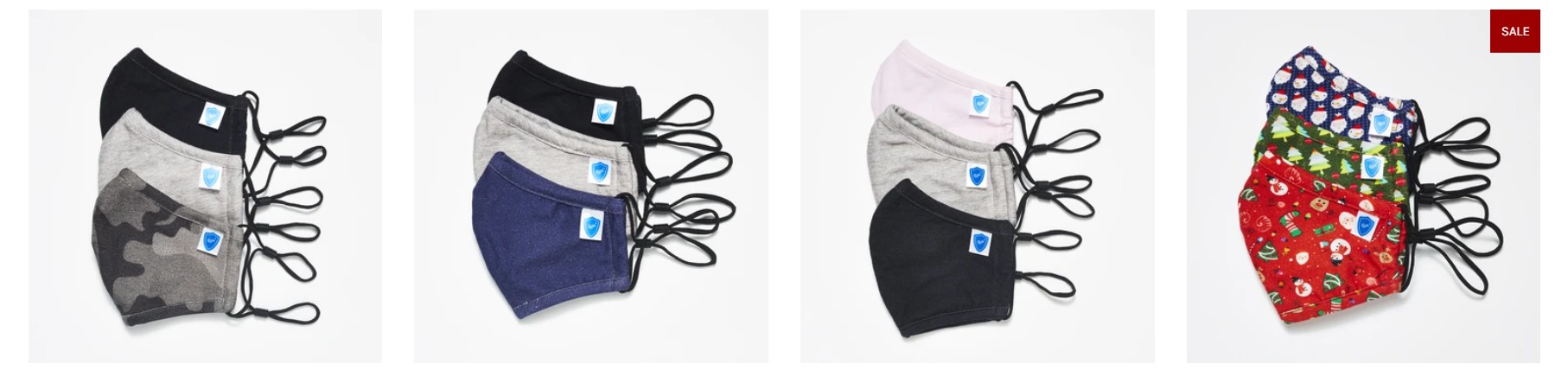
How do antimicrobial face masks work?
This range of antimicrobial face masks uses materials that self-sanitise to keep the mask and the user clear. However, with conventional cloth masks, the virus and other bacteria can still be transferred by touch when wearing the mask. For example, when you wear your face mask, you have to pick it up, put it on, adjust it and ensure it is covering all of your nose and mouth. In this time you have repeatedly transferred any germs across the whole of your face mask and then onto any surfaces that you touch.
Although antimicrobial face masks are not guaranteed to eradicate the transferal of germs, they can help to reduce the likelihood of infection from touching. This comes down to the materials that they are made from, with some containing copper to help to kill bacteria and viruses that they come into contact with. However, the Carrington Mask is made using textile technology that is added to the fabric in the final stage of the manufacturing processes. This technology is proven to be up to 99.99% effective against SARS-CoV-2.
Why you should invest in an antimicrobial facemask
Whether you decide to wear a conventional mask or an antimicrobial face mask is your decision, and can often be one that is determined by convenience, cost or aesthetics. However, these factors do not address the most critical issue of proper protection and whilst antimicrobial face masks cannot completely eliminate the risk of transmission, they can provide a higher level of protection against harmful bacteria and viruses, such as SARS-CoV-2.